
When to Use an Apron Feeder Instead of a Conveyor
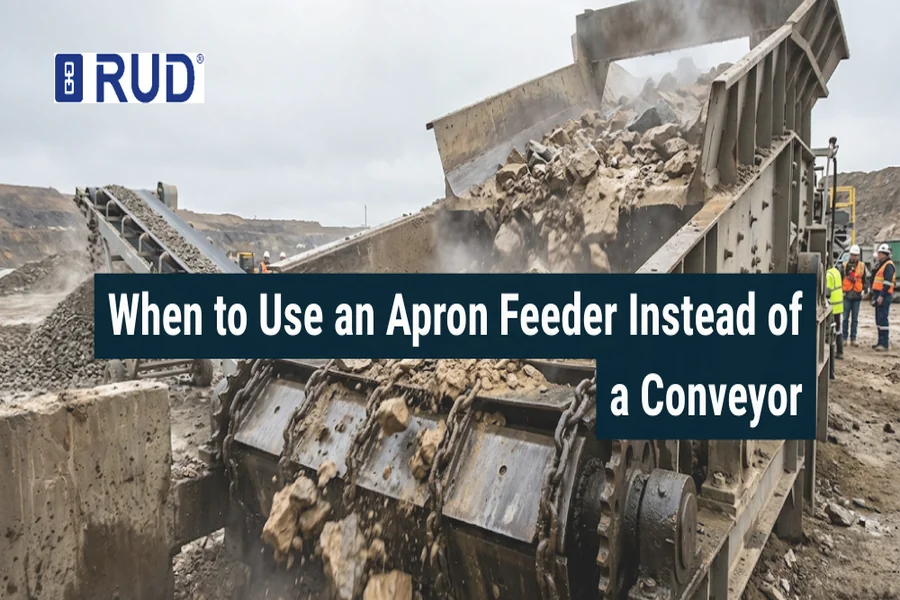
Apron feeders make more sense than conveyors when your feed material pushes beyond what rubber belts can tolerate. We’re talking about oversized lumps, abrasive ore, sticky clay and high-temperature loads.
Here at RUD Engineering, our team has spent decades solving material handling problems across mining, power generation and heavy industry. We understand what performs reliably over time and what doesn’t hold up under pressure.
In this article, we’ll discuss when to choose an apron feeder and how it differs from a conveyor. We’ll also share what you should consider before installation.
Ready? Let’s begin.
When Should You Use an Apron Feeder Over a Conveyor?
You should use an apron feeder when your material is too heavy, too large, too hot or too sticky for a belt conveyor to handle reliably. This is because rubber belts have clear limits, whereas steel pans can handle these tougher conditions without issue.
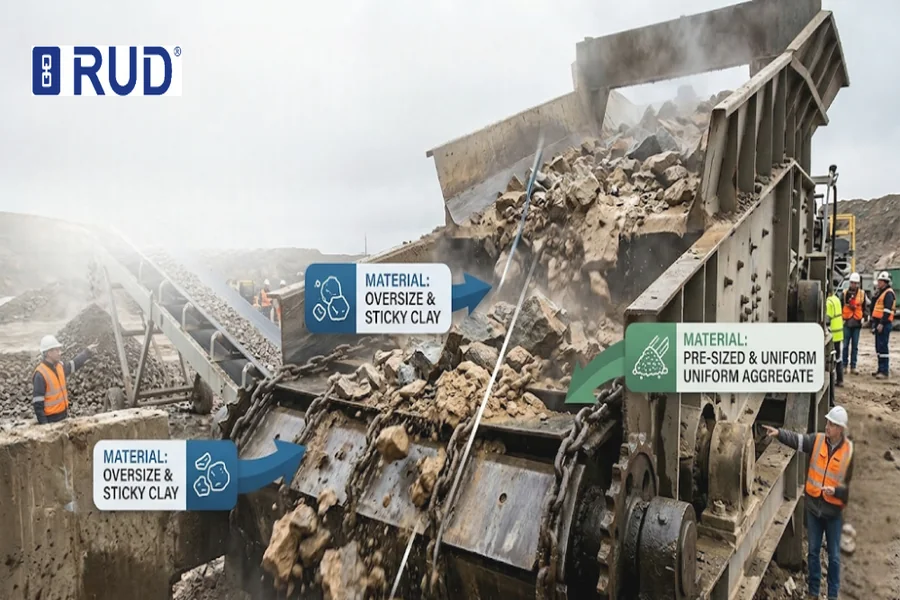
Here are five situations where an apron feeder outperforms a standard conveyor:
- Feeding Primary Crushers: Apron feeders sit under hoppers and feed material into crushers at a steady, controlled rate. Without this control, sudden surges can choke downstream equipment and slow the whole operation. While belt conveyors can move material, they don’t offer the same level of control over the feed rate.
- Handling Large Lump Sizes: Since haul trucks drop heavy rocks from a height, the impact is too much for rubber belts to handle. In comparison, heavy-duty apron feeders can take that load without damage, making them more suitable for handling large, unprocessed materials. That’s why conveyors are better suited to pre-sized material where impact isn’t an issue. For businesses evaluating equipment and fleet options, exploring used trucks in dallas can also support efficient material transport, offering durable and cost-effective vehicles capable of handling demanding industrial operations while maintaining productivity and reliability.
- Processing Wet or Sticky Feed: Sticky clay and wet ore can quickly cause problems for belt conveyors, as the material tends to build up and stick. But apron feeders handle it easily because their overlapping pans create a sealed surface that keeps material moving (a real advantage during the wet season when moisture content swings wildly).
- High-Temperature Applications: Rubber belts can’t handle high heat, so materials like hot clinker, slag and ash need a tougher option. In these conditions, quenched and tempered steel pans keep performing reliably, even over long shifts. Power plants and dry deashing operations often choose apron feeders for these reasons.
- Continuous 24/7 Operations: Downtime costs you more than the equipment itself in the mining industry. You can avoid that downtime with apron feeders because they run for years with minimal major servicing and keep operations steady. However, belt conveyors wear faster under heavy loads and require more upkeep to stay operational.
Put simply, when the job gets harder, feeders keep your operation running without the usual setbacks.
What Are the Primary Differences Between Apron Feeders and Conveyors?
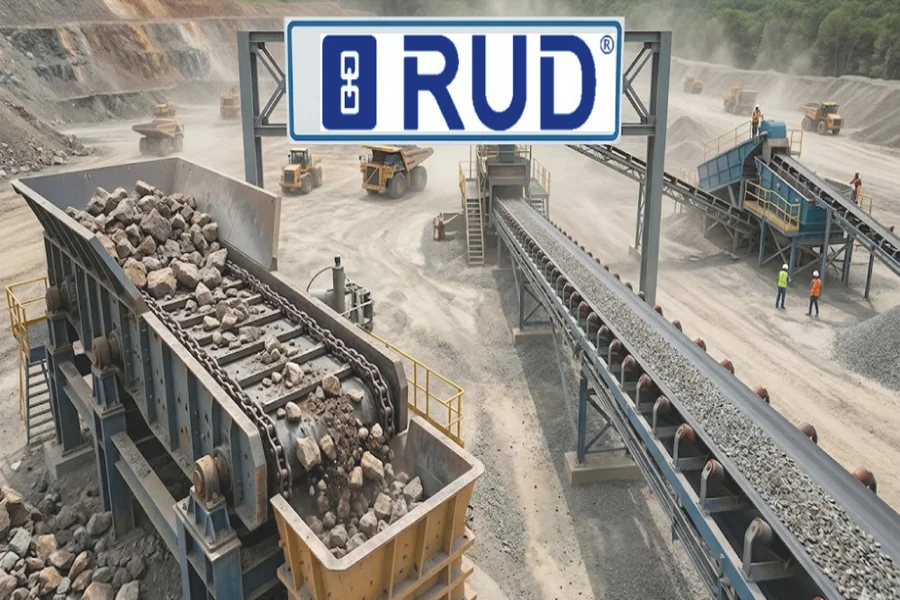
Apron feeders use overlapping steel pans on heavy chains to carry material slowly, while conveyors use rubber belts to move lighter material faster over longer distances. Both options handle bulk material, but they’re built for very different jobs.
We’ll get into more details about these options.
How They’re Built
When you replace a rubber belt with overlapping steel pans, the whole system works differently. The pans attach to a heavy-duty chain, which runs along rollers inside a rigid frame. A head shaft drives the chain at the discharge end, while a tail shaft maintains proper tension at the rear.
Conveyors are simpler. A continuous rubber belt stretches over pulleys and idlers, and that’s about it. It works fine for lighter duty, but it can’t match the robust design an apron feeder brings.
How They Handle Material
Apron feeders keep material contained and controlled, even when you’re dealing with large lump sizes or wet feed. It’s because the pans overlap to form a sealed carrying surface. The material stream moves with minimal spillage, which is a big deal when sticky ore or dusty conditions are part of daily operations.
But conveyors cover longer distances efficiently and handle lighter material without issue. That said, they aren’t built for it if the feeds get difficult to manage.
Site insight: Sticky material issues often appear gradually and then escalate quickly once the buildup starts.
Speed and Feed Control
If you’re looking for precision over speed, apron feeders are the answer. They run at low speeds, and that gives you tight control over feed rate.
Particularly, the feeder system’s variable speed drives let operators dial in exactly what the crusher needs. That means no overloading, and your throughput stays steady.
However, if you want speed over precise control, conveyors will give you that. They’re designed to carry material in bulk rather than regulate it, so you can’t adjust the flow as accurately.
Maintenance and Service Life
Once you’ve installed an apron feeder, your crew won’t have to do much in terms of maintenance work. Why? Well, a feeder’s sealed components keep lubrication to a minimum. Plus, carry rollers and return rollers swap out from outside the frame, so no one has to pull the whole thing apart.
And the chains and sprockets of apron feeders last, too (some sites get a decade or more out of them before replacement). That kind of longevity is hard to match with a belt system.
What Should You Consider Before Installation?
You should consider your plant layout, hopper configuration, downstream equipment integration and maintenance access before installing an apron feeder. If you get these things right, your feeder will run smoothly for years.
Sort out these factors before installing your feeder system:
- Plant Layout and Space Constraints: Apron feeders are installed horizontally or at an incline, which gives you options when floor space is tight. Reduced-height designs also fit beneath hoppers in low-clearance applications. This flexibility is important on mining sites where plant layouts rarely offer extra room.
- Hopper Configuration: It’s important to ensure that your pan width exceeds the maximum lump size. Otherwise, your material will bridge and flow will stop. The hopper shear length opening also affects feeder sizing and drive power. We recommend working with your supplier early to match your hopper geometry with feeder specs.
- Integration With Downstream Equipment: One of the benefits of getting the feeder length right is that it can eliminate transfer points to crushers or screens. Shorter feeders mean lower capital cost and reduced power consumption.
- Access for Maintenance: Your crew needs enough space to work safely. Since impact rails and pans are serviced from the tail end, you should leave clear access in that area. You should also allow space around the feeder frame, as tight layouts make maintenance harder and slower.
When these elements line up, the feeder fits properly and functions the way it should.
Selecting the Right Feeder for Your Operation
Apron feeders don’t suit every job, but they handle heavy loads, large lumps, wet feed and high heat better than anything else. Meanwhile, conveyors work well for lighter material over longer distances, though they won’t hold up under the same harsh conditions.
If tough conditions are part of your work and you need reliable material handling without constant maintenance, an apron feeder pays for itself over time.
RUD Australia supplies heavy-duty apron feeders built for high-temperature and high-abrasive applications. Talk to our team about what suits your site.